The Role of Agriculture in Guinea's Economy: Challenges and Modernization Efforts
Introduction
Agriculture plays a vital role in Guinea's economy, serving as the backbone of livelihood for the majority of the population. Located in West Africa, Guinea is endowed with abundant natural resources, including vast tracts of arable land, water resources, and favorable climatic conditions that support the cultivation of a wide range of crops. Despite these advantages, the agricultural sector in Guinea faces significant challenges that have hampered its full potential. In recent years, there have been concerted efforts by the government, international organizations, and private investors to modernize the sector to increase productivity, improve food security, and bolster economic growth. This article examines the role of agriculture in Guinea's economy, the challenges the sector faces, and the ongoing efforts to modernize and improve it.

The Significance of Agriculture in Guinea's Economy
Agriculture is a crucial pillar of Guinea's economy, accounting for a substantial portion of the country's Gross Domestic Product (GDP) and employing a majority of its population. The sector provides food security, employment, and raw materials for local industries, as well as export commodities.
Contribution to GDP and Employment
Agriculture contributes approximately 20-25% to Guinea's GDP. However, this figure fluctuates depending on external factors such as climatic conditions and market demand. The agricultural sector remains the largest employer in the country, with about 75% of Guinea's labor force engaged in farming , livestock rearing, or fishing. Most of this labor force is engaged in small-scale, subsistence farming, although there are also a few large-scale commercial farms.
Major Agricultural Products
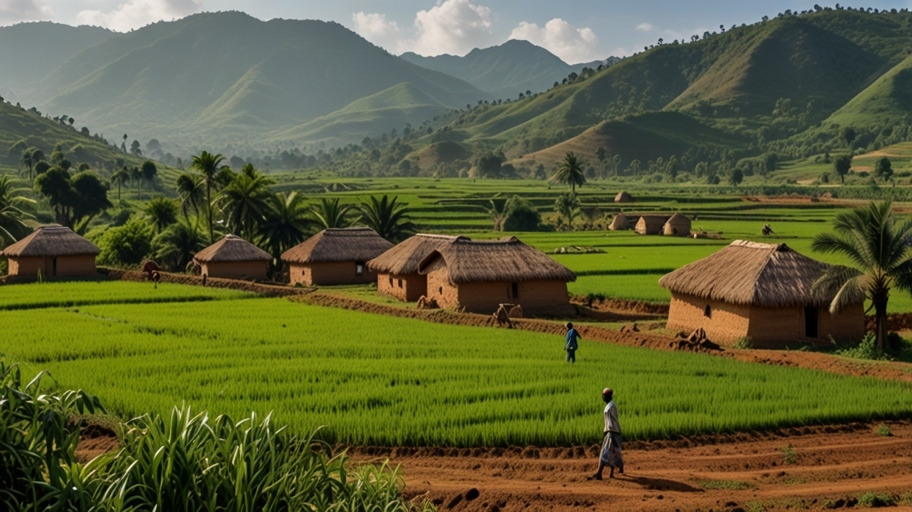
Guinea's diverse climatic conditions and geography allow for the cultivation of a variety of crops. Key crops grown include rice, maize, cassava, peanuts, and sweet potatoes. The country also produces cash crops such as coffee, cocoa, and palm oil, which are important export commodities. Guinea's fertile highlands and coastal plains are ideal for rice cultivation, with rice being the staple food for most of the population.
Livestock farming is another significant component of Guinea's agricultural sector. Guinea's vast savannahs provide ample grazing land for cattle, sheep, goats, and poultry, with livestock contributing to the food supply and income of rural households.
Guinea is also rich in fisheries resources, with its coastal regions offering abundant fish and seafood, which are important for domestic consumption and export. However, despite its potential, the fisheries sector remains underdeveloped and poorly regulated.
Challenges Facing Agriculture in Guinea
Despite its importance, the agricultural sector in Guinea faces numerous challenges that have constrained its growth and productivity. These challenges are multifaceted and include inadequate infrastructure, outdated farming techniques, environmental degradation, poor access to finance, and lack of market access.
Inadequate Infrastructure
One of the major hurdles to agricultural development in Guinea is the lack of adequate infrastructure, particularly in rural areas where most agricultural activities take place. Poor road networks make it difficult for farmers to transport their to markets, leading to high post-harvest losses and limited access to markets. This problem is exacerbated during the rainy season when roads become impassable, further isolating rural farming communities.
In addition to transportation challenges, the lack of reliable energy supply and water management systems hampers agricultural productivity. Irrigation infrastructure is limited, and most farmers rely on rain-fed agriculture, making them vulnerable to fluctuations in rainfall patterns due to climate change. This limits the ability of farmers to engage in year-round farming, reducing overall output.
Outdated Farming Techniques
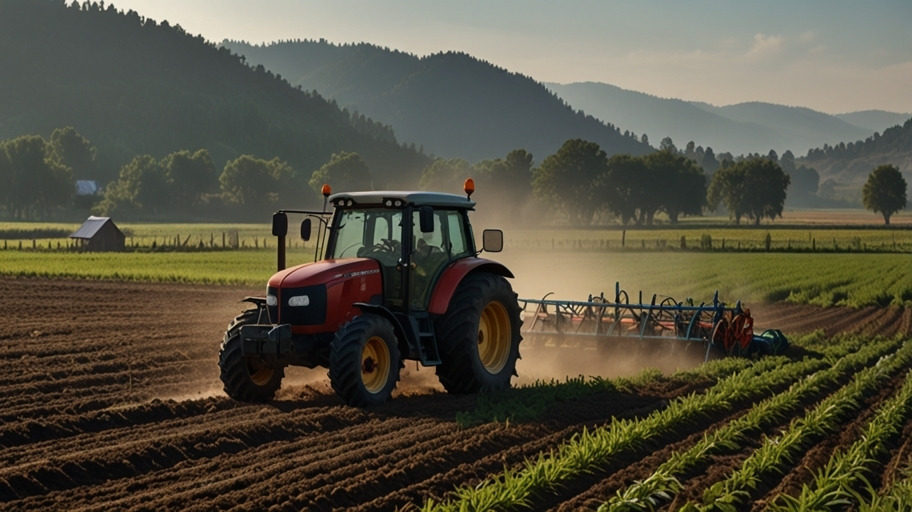
Most farmers in Guinea still rely on traditional farming techniques that are labor-intensive and inefficient. The use of rudimentary tools, such as hoes and machetes, limits the scale of production and productivity. Mechanization is limited, with few farmers having access to tractors, modern planting, and harvesting equipment. This lack of mechanization keeps labor costs high and limits the ability of farmers to increase yields and expand their farms.
Additionally, many farmers have limited access to quality seeds, fertilizers, and pesticides, which constrains productivity. Poor soil management practices, such as overgrazing and deforestation, have led to land degradation, reducing the fertility of agricultural land and contributing to further crop declining yields .
Limited Access to Finance
Access to finance is a critical constraint for many smallholder farmers in Guinea. Most farmers operate on a subsistence basis with limited capital to invest in modern inputs and equipment. The rural banking system is underdeveloped, and there are few financial institutions that offer credit to farmers Those that do offer credit often have high-interest rates or require collateral that farmers cannot provide. As a result, farmers are unable to invest in the tools and inputs they need to increase productivity, modernize their farms, or expand their operations.
Environmental Challenges
Environmental degradation poses a significant challenge to agriculture in Guinea. Deforestation, soil erosion, and desertification are widespread, especially in the northern regions of the country. These problems are often exacerbated by unsustainable farming practices, such as slash-and-burn agriculture and overgrazing Deforestation, in particular, has led to the depletion of forest resources that many rural communities rely on for fuel and non-timber forest products.
The effects of climate change are also becoming increasingly apparent, with unpredictable rainfall patterns, rising temperatures, and more frequent extreme weather events affecting agricultural productivity. Flooding, in particular, has devastated farms in low-lying regions, while droughts have affected crop yields in the interior highlands.
Poor Market Access and Value Chains
Access to markets is another significant challenge for farmers in Guinea. Many smallholder farmers lack the necessary infrastructure, such as storage facilities and transportation, to access markets and sell their produce at fair prices. As a result, they are often forced to sell their crops at lower prices to middlemen or local traders.
In addition, Guinea's agricultural value chains remain underdeveloped. There is limited processing capacity within the country, and many agricultural products are exported in raw form, which limits their potential value. The lack of agro-processing industries means that the country is missing out on the opportunity to create jobs, increase income, and add value to its agricultural products.
Modernization Efforts in Guinea's Agricultural Sector
Despite the challenges, there have been several initiatives aimed at modernizing Guinea's agricultural sector. These efforts, driven by both government policies and international support, focus on improving infrastructure, promoting the adoption of modern farming techniques, expanding access to finance, and developing agro- industries.
Government Initiatives
The government of Guinea recognizes the importance of agriculture in achieving sustainable economic growth and poverty reduction. As a result, it has made several policy interventions aimed at boosting the sector. One such is the National Agriculture Investment Plan (PNIA) , which seeks to increase agricultural productivity, improve food security, and promote agro-industrial development.
The PNIA focuses on modernizing farming techniques, increasing mechanization, and improving access to inputs such as seeds and fertilizers. It also emphasizes the need to invest in rural infrastructure, including roads, storage facilities, and irrigation systems. The plan encourages public-private partnerships (PPPs) to attract private investment in the agricultural sector and strengthen value chains.
Another government initiative is the Program for the Acceleration of Agricultural Growth (PAGA) , which is aimed at increasing agricultural production by improving the productivity of smallholder farmers. The program provides technical assistance, training, and access to finance for farmers, with a particular focus on promoting sustainable farming practices and climate-resilient agriculture.
International Support and Development Programs
International organizations, including the World Bank , the International Fund for Agricultural Development (IFAD) , and the Food and Agriculture Organization (FAO) , have been instrumental in supporting Guinea's agricultural modernization efforts. These organizations provide financial and technical support for various projects aimed at increasing productivity, improving infrastructure, and promoting sustainable farming practices.
For instance, the World Bank's West Africa Agricultural Productivity Program (WAAPP) has supported Guinea in developing improved agricultural technologies, promoting research and innovation, and increasing access to modern inputs such as seeds and fertilizers. The program has also focused on strengthening value chains and improving market access for farmers.
IFAD has been working to improve the livelihoods of smallholder farmers by providing access to finance, training, and rural infrastructure. Its Rural Growth Support Project (PASGR) aims to increase the productivity of smallholder farmers by promoting the use of modern farming techniques and improving access to markets.
Promoting Agro-Processing and Value Addition
One of the key strategies for modernizing Guinea's agricultural sector is the development of agro-processing industries. The government has been working to attract investment in agro-industries that can add value to agricultural products, such as rice milling, coffee processing, and palm oil production. The development of these industries is crucial for creating jobs, increasing income, and reducing the country's reliance on raw commodity exports.
In addition, there are efforts to improve access to markets and strengthen agricultural value chains. This includes investments in rural infrastructure, such as storage facilities and transportation networks, to reduce post-harvest losses and improve farmers' access to markets. The promotion of cooperatives and farmer organizations have also been encouraged to help smallholder farmers access inputs, credit, and markets more effectively.
Conclusion
Agriculture remains a central pillar of Guinea's economy, providing livelihoods for a majority of the population and contributing significantly to the country's GDP. However, the sector faces numerous challenges that have constrained its growth and development, including inadequate infrastructure, outdated farming techniques, limited access to finance, environmental degradation, and poor market access.
Despite these challenges, there are ongoing efforts to modernize Guinea's agricultural sector through government initiatives, international support, and private investment. These efforts focus on improving infrastructure, promoting modern farming techniques, expanding access to finance, and developing agro-processing industries to add value to agricultural products. While significant progress has been made, further investment and policy reform are needed to fully unlock the potential of Guinea's agricultural sector and ensure that it can contribute to sustainable economic growth and poverty reduction.