Guinea's Infrastructure Development: Roads, Ports, and Connectivity Projects
Guinea, a West African nation rich in natural resources, has faced significant challenges related to infrastructure development, which have long impeded its potential for economic growth. Over the past decades, the lack of a well-developed transportation network, including roads, ports, and other forms of connectivity, has been a significant bottleneck for trade, industrialization, and economic inclusion. However, in recent years, Guinea has undertaken numerous ambitious infrastructure development projects aimed at modernizing its transportation and connectivity sectors. These projects are pivotal for ensuring that Guinea maximizes the economic benefits of its natural resources, such as bauxite and iron ore, and integrates more seamlessly into the global market.
This article will delve into the key areas of infrastructure development in Guinea, focusing on roads, ports, and connectivity projects. We will examine the current state of these sectors, highlight ongoing projects, and assess the challenges and opportunities that lie ahead.

1. The State of Guinea's Road Infrastructure
Historical Context
Guinea's road infrastructure has historically been underdeveloped, with only a small percentage of the country's total road network being paved. This has hampered economic activity, particularly in rural areas, where access to markets and essential services is limited. In the 1970s and 1980s, Guinea struggled with political instability and poor governance, which led to minimal investment in infrastructure. Additionally, the country's mountainous terrain made road construction particularly expensive and challenging.
The road network in Guinea comprises approximately 44,000 kilometers of roads, but as of the early 2000s, less than 10% of these roads were paved. The majority of Guinea's population relies on unpaved roads, which become impassable during the rainy season. This has historic restricted movement, stifled trade, and raised transportation costs.
1.2. Recent Developments in Road Infrastructure
In recent years, the government of Guinea, with support from international partners such as the World Bank, African Development Bank (AfDB), and the European Union, has undertaken significant road construction and rehabilitation projects. These projects aim to improve accessibility, reduce travel times, and facilitate the movement of goods and people across the country.
Key Projects:
- The Conakry-Mamou-Kankan Road : One of the most critical roadways in Guinea, this highway connects the capital, Conakry, with the country's interior regions. The road is vital for facilitating trade, particularly for the transportation of mining products. Major rehabilitation efforts have been carried out to ensure this road remains passable year-round.
- Trans-Guinean Highway : This project involves the construction and upgrading of a national highway network that will link Guinea's major urban centers and key economic regions. The highway is crucial for connecting Guinea's remote areas to the capital and facilitating regional trade.
-
Feeder Road Programs : Several projects aim to rehabilitate rural and feeder roads, which are crucial for improving agricultural productivity. By linking rural communities to urban markets, these projects enable farmers to transport their goods more efficiently, thus boosting incomes and improving food security.
1.3. Challenges in Road Infrastructure
While significant progress has been made, challenges remain in ensuring long-term sustainability and expansion of Guinea's road network. Some of the major challenges include:
- Funding : Infrastructure projects are capital-intensive, and Guinea, being a low-income country, often struggles to mobilize sufficient domestic resources. The country has relied heavily on international donors and lenders, which can sometimes lead to delays or changes in project scope.
- Maintenance : Many roads that are rehabilitated quickly fall into disrepair due to inadequate maintenance. A sustainable maintenance program and funding mechanism are essential to preserve the long-term usability of Guinea's road network.
- Geographical Challenges : Guinea's rugged terrain makes road construction costly and technically complex. Many remote regions are difficult to access, particularly during the rainy season, when roads are prone to erosion and landslides.
2. Port Infrastructure: Guinea's Gateway to the World
2.1. Importance of Ports in Guinea
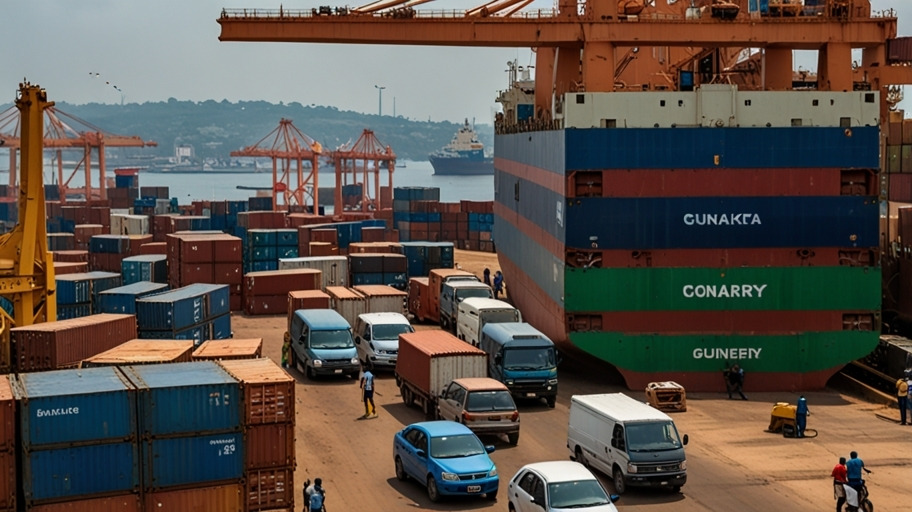
Guinea's economy is heavily reliant on mineral exports, particularly bauxite, which is the primary source of aluminum. As such, the country's ports are critical for its economic development. The Port of Conakry, the largest and busiest port in Guinea, handles a significant portion of the country's exports and imports, serving as a hub for regional trade as well. Efficient port infrastructure is essential to ensure that Guinea's natural resources reach international markets in a timely and cost-effective manner.
2.2. Major Ports and Development Projects
Port of Conakry : The Port of Conakry is Guinea's main maritime gateway and a lifeline for the country's trade. It has undergone extensive modernization over the last decade, aimed at increasing its capacity and improving efficiency. In 2011, the government of Guinea signed a 25 -year concession agreement with Bolloré Africa Logistics, a French logistics and port management company, to manage and upgrade the port's facilities. Significant investments were made to expand container terminals, dredge the port to accommodate larger ships, and modernize equipment, making the Port of Conakry one of the most modern ports in West Africa.
Port of Kamsar : Kamsar is the site of one of Guinea's largest bauxite mines, and the port in Kamsar is dedicated primarily to the export of bauxite. The Société Minière de Boké (SMB), a consortium of companies involved in bauxite mining, has heavily invested in port infrastructure to ensure efficient export operations. The port's development has been crucial in positioning Guinea as the world's largest exporter of bauxite.
Port of Benty : Located in the southern part of Guinea, the Port of Benty has been earmarked for development to handle more bauxite exports, especially from the nearby Boké region. The port will be essential for relieving congestion at Conakry and Kamsar and expanding Guinea's overall export capacity.
2.3. Challenges in Port Development
Guinea's ports, particularly the Port of Conakry, face several challenges:
- Congestion : Despite recent upgrades, the Port of Conakry still struggles with congestion, particularly during peak export seasons. Inefficiencies in customs processing and limited port space contribute to delays.
- Environmental Concerns : Port development projects, especially those related to mining exports, often raise concerns about environmental degradation. Careful planning is needed to ensure that port expansions do not harm Guinea's coastal ecosystems.
-
Dependence on Natural Resources : The heavy reliance on mineral exports makes Guinea's port infrastructure vulnerable to global commodity price fluctuations. Diversifying exports through the development of other industries could help mitigate this risk.

3. Connectivity Projects: Integrating Guinea into the Regional and Global Economy
3.1. Telecommunications and Digital Connectivity
In addition to physical infrastructure, Guinea is working on improving its digital connectivity. Access to the internet and reliable telecommunications services are crucial for modern economic development, as they facilitate business, innovation, and access to global markets. Guinea has lagged behind other West African nations in terms of internet penetration and digital infrastructure, but efforts are underway to close this gap.
Key Developments in Digital Infrastructure:
- Fiber-Optic Backbone : Guinea has invested in the expansion of a fiber-optic backbone across the country, which will improve internet access in both urban and rural areas. This project, funded in part by the World Bank, aims to increase the availability of high-speed internet and reduce the cost of broadband services.
-
Mobile Telecommunications : Mobile phone penetration has increased significantly in recent years, with several private operators competing in the market. However, the quality of service remains inconsistent, particularly in rural areas. Ongoing efforts to improve network coverage and capacity will be essential for ensuring that all Guineans have access to reliable telecommunications services.
3.2. Railway Projects: Enhancing Connectivity for Mining and Trade
Railway infrastructure is another critical area of connectivity development in Guinea, particularly for the transportation of mining products. Guinea's vast reserves of bauxite, iron ore, and other minerals are often located in remote regions, far from the country's ports. Efficient rail transport is essential for ensuring that these resources can be exported to global markets cost-effectively.
Key Railway Projects:
- Simandou Railway Project : The Simandou iron ore project is one of the largest untapped iron ore deposits in the world, and its development requires significant infrastructure investments, particularly in railways. The Simandou railway project involves the construction of a 650-kilometer rail line that will connect the Simandou mine to a new port on the Guinean coast. This railway will be essential for transporting iron ore to international markets, and its development is a key component of Guinea's long-term economic strategy.
- Boké Railway : The Boké region, home to some of the world's largest bauxite deposits, has also seen significant investments in railway infrastructure. The Société Minière de Boké (SMB) has constructed a dedicated rail line for the export of bauxite, reducing the pressure on road networks and ensuring more efficient transportation of mining products.
3.3. Regional Connectivity and Integration
Guinea is part of the Economic Community of West African States (ECOWAS), and regional connectivity projects are essential for enhancing trade within the region. The development of cross-border highways and railways will improve Guinea's access to neighboring countries and facilitate regional economic integration.
Trans-West African Coastal Highway : This ambitious project aims to connect West African coastal countries from Mauritania to Nigeria, passing through Guinea. The highway will enhance trade and connectivity within the region, making it easier for Guinea to export its goods to other West African markets.
4. Challenges and Opportunities for Infrastructure Development
Challenges
While Guinea has made significant strides in infrastructure development, several challenges remain:
- Political Instability : Guinea has experienced periods of political unrest, which can delay or disrupt infrastructure projects. Ensuring political stability and good governance is essential for attracting investment and completing large-scale projects.
- Financing : Infrastructure projects are capital-intensive, and Guinea often rely on external financing. While international partners have been supportive, sustainable financing mechanisms are needed to ensure long-term development.
- Corruption : Corruption remains a significant challenge in Guinea, and it can undermine infrastructure development efforts. Transparent procurement processes and strong oversight mechanisms are essential for ensuring that infrastructure projects are completed efficiently and without delays.
Opportunities
- Natural Resource Wealth : Guinea's vast natural resources provide a significant opportunity for financing infrastructure development. By leveraging its mineral wealth, the country can attract investment in roads, ports, and railways.
- Regional Integration : Guinea's participation in regional connectivity projects, such as the Trans-West African Coastal Highway, will enhance its trade links with neighboring countries and improve access to international markets.
Conclusion
Guinea's infrastructure development is critical for unlocking the country's economic potential and improving the lives of its citizens. Significant progress has been made in recent years, particularly in the areas of roads, ports, and digital connectivity. However, challenges remain, including funding, maintenance , and political stability. By continuing to invest in infrastructure and addressing these challenges, Guinea can position itself as a key player in the West African region and the global economy.